miércoles, 29 de febrero de 2012
sí
Por dos décadas y casi un lustro he habitado en esta tierra, que muchas veces está llena de visicitudes y abirragadas paredes. Plagada de engendros y anormalidades. Pero, que al mismo tiempo está atestada de toda clase de portentos. De las anécdotas más deseables en mi vida: que nuestros caminos se hayan cruzado, me ha producido tal dicha que podría fencer sin sufrir, sabiendo que no escasearon las vivencias a mi existencia.

lunes, 27 de febrero de 2012
Daniel DeFoe
His real name was Daniel Foe, but he used different nicknames to avoid mocks about his name. He was and English writer and journalist. He's considered as the English Novel Founder and accused to be the first in write a novel.
Among his works, there is an essay about economic problems, several works criticizing church; for instance, Religious Courtship where he accuses church leaders of being hypocrites and where he satirizes church. He were in New Gale Prison due to his written works.
Between 1719 and 1724 he published the works of which he became famous. For example: Everybody's business is nobody's business, Robinson Cursoe (1719), among others.
Robinson Cursoe is the narration of the adventures of a man in an island, it is an allegory of the civilization, is narrated in first person, is individualized and could be better defined as an essay than a novel for being a collection of papers.

Among his works, there is an essay about economic problems, several works criticizing church; for instance, Religious Courtship where he accuses church leaders of being hypocrites and where he satirizes church. He were in New Gale Prison due to his written works.
Between 1719 and 1724 he published the works of which he became famous. For example: Everybody's business is nobody's business, Robinson Cursoe (1719), among others.
Robinson Cursoe is the narration of the adventures of a man in an island, it is an allegory of the civilization, is narrated in first person, is individualized and could be better defined as an essay than a novel for being a collection of papers.

Jonathan Swift

Jonathan Swift was born 30 November 1667 in Dublin Ireland, he was an satirist, essayist, political pamphleteer, poet and cleric. He belonged to an Anglo-Irish family. But he suffered from many diseases, one of them: Menier's; what made him suffer from inner ear & dizziness, vertigo, nausea and hearing lose. He died in 19 October 1745 and is buried in St. Patrick's Cathedral.
Estela: "Stela" was a very important character in his life. He was in love with her thus, he wrote the "Journals for Stela". Of his works: Gulliver's Travels, Drapier's Letters and A Tale of Tub.
A Modest Proposal for Preventing the Children of Poor People in Ireland Being a Burden on Their Parents or Country, and for Making Them Beneficial to the Publick is a book where Swift mocks of poor people & Irish policy. In the 18th Century economics were terrible and government treated people as commodities. In this book the writer uses language which would be used for animals.

Another very remarkable book is the "Gulliver's Travels". Where he narrates the story of a man who travels through unknown places and lives lots of adventures. The book is divided in Chapters which are the places he visit.

lunes, 20 de febrero de 2012
Tragedy

*is a form of
drama based on human suffering
*The word
"tragedy" appears to have been used to describe different phenomena
at different times. It derives from Classical Greek: trag(o)-aoidia
Renaissance tragedy
*mystery plays, morality plays, farces and miracle plays
*The most
important sources for French tragic theatre in the Renaissance were the example
of Seneca and the precepts of Horace and Aristotle.
Neo-classical tragedy
*Pierre Corneille, who made his mark on the world of tragedy with plays like Medée (1635) and Le Cid (1636), was the most successful writer of French tragedies
*noble
characters
*deals with affairs
of the state
Bourgeois tragedy
*18th-century Europe
*Enlightenment
*they made fun of bourgeois class
*George Lillo's The London Merchant
Edmund Spenser
Maybe he was born in 1552 and he died in 1599. Edmund Spenser was born in England in a little city called East Smithfield. He met Walter Raleigh in Ireland, because them both were there servicing the Queen Elizabeth. He was also priced for a poem named "Waht, all this for a song!", the Queen gave him 100 pounds. Spenser also got married. And finally died in 1599, he's buried in West Mraleigh, and died for unknown circumstances.
Pieces of his art:


Pieces of his art:
- Iambicum Trimetrum
- The Faerie Queene
- Daphnaïda
- Two Cantos of Mutabilitie
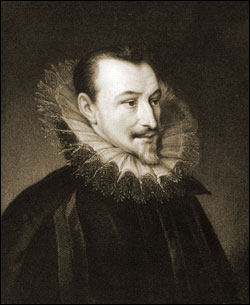

Shakespeare's Sonnets
Another very important contribution of Shakespeare are his sonnets. These sonnets have certain characteristics, for example them all have only 14 lines, rime and usually are about love. Sonnets are poems. Following some examples:
Shall I compare thee to a summer's day?
Thou art more lovely and more temperate:
Rough winds do shake the darling buds of May,
And summer's lease hath all too short a date:
Sometime too hot the eye of heaven shines,
And often is his gold complexion dimm'd;
And every fair from fair sometime declines,
By chance or nature's changing course untrimm'd;
But thy eternal summer shall not fade
Nor lose possession of that fair thou owest;
Nor shall Death brag thou wander'st in his shade,
When in eternal lines to time thou growest:
My mistress' eyes are nothing like the sun;
Coral is far more red than her lips' red;
If snow be white, why then her breasts are dun;
If hairs be wires, black wires grow on her head.
I have seen roses damask'd, red and white,
But no such roses see I in her cheeks;
And in some perfumes is there more delight
Than in the breath that from my mistress reeks.
I love to hear her speak, yet well I know
That music hath a far more pleasing sound;
I grant I never saw a goddess go;
My mistress, when she walks, treads on the ground:
And yet, by heaven, I think my love as rare
As any she belied with false compare.
When, in disgrace with fortune and men's eyes,
I all alone beweep my outcast state
And trouble deaf heaven with my bootless cries
And look upon myself and curse my fate,
Wishing me like to one more rich in hope,
Featured like him, like him with friends possess'd,
Desiring this man's art and that man's scope,
With what I most enjoy contented least;
Yet in these thoughts myself almost despising,
Haply I think on thee, and then my state,
Like to the lark at break of day arising
From sullen earth, sings hymns at heaven's gate;
For thy sweet love remember'd such wealth brings
That then I scorn to change my state with kings.
When to the sessions of sweet silent thought
I summon up remembrance of things past,
I sigh the lack of many a thing I sought,
And with old woes new wail my dear time's waste:
Then can I drown an eye, unused to flow,
For precious friends hid in death's dateless night,
And weep afresh love's long since cancell'd woe,
And moan the expense of many a vanish'd sight:
Then can I grieve at grievances foregone,
And heavily from woe to woe tell o'er
The sad account of fore-bemoaned moan,
Which I new pay as if not paid before.
But if the while I think on thee, dear friend,
All losses are restored and sorrows end.

SONNET 18
Shall I compare thee to a summer's day?
Thou art more lovely and more temperate:
Rough winds do shake the darling buds of May,
And summer's lease hath all too short a date:
Sometime too hot the eye of heaven shines,
And often is his gold complexion dimm'd;
And every fair from fair sometime declines,
By chance or nature's changing course untrimm'd;
But thy eternal summer shall not fade
Nor lose possession of that fair thou owest;
Nor shall Death brag thou wander'st in his shade,
When in eternal lines to time thou growest:
So long as men can breathe or eyes can see,
So long lives this and this gives life to thee.
So long lives this and this gives life to thee.
SONNET 130
My mistress' eyes are nothing like the sun;
Coral is far more red than her lips' red;
If snow be white, why then her breasts are dun;
If hairs be wires, black wires grow on her head.
I have seen roses damask'd, red and white,
But no such roses see I in her cheeks;
And in some perfumes is there more delight
Than in the breath that from my mistress reeks.
I love to hear her speak, yet well I know
That music hath a far more pleasing sound;
I grant I never saw a goddess go;
My mistress, when she walks, treads on the ground:
And yet, by heaven, I think my love as rare
As any she belied with false compare.
SONNET 29
When, in disgrace with fortune and men's eyes,
I all alone beweep my outcast state
And trouble deaf heaven with my bootless cries
And look upon myself and curse my fate,
Wishing me like to one more rich in hope,
Featured like him, like him with friends possess'd,
Desiring this man's art and that man's scope,
With what I most enjoy contented least;
Yet in these thoughts myself almost despising,
Haply I think on thee, and then my state,
Like to the lark at break of day arising
From sullen earth, sings hymns at heaven's gate;
For thy sweet love remember'd such wealth brings
That then I scorn to change my state with kings.
SONNET 30
When to the sessions of sweet silent thought
I summon up remembrance of things past,
I sigh the lack of many a thing I sought,
And with old woes new wail my dear time's waste:
Then can I drown an eye, unused to flow,
For precious friends hid in death's dateless night,
And weep afresh love's long since cancell'd woe,
And moan the expense of many a vanish'd sight:
Then can I grieve at grievances foregone,
And heavily from woe to woe tell o'er
The sad account of fore-bemoaned moan,
Which I new pay as if not paid before.
But if the while I think on thee, dear friend,
All losses are restored and sorrows end.

Shakespearean Comedy

Shakespeare offers us a Comedy with his own firm in all that. He was a poet and became famous for his collaborations while Queen Elizabeth was reigning.
Shakespeare's comedy was very different of what we know as comedy now a days. He made more emphasis in situations than in characters. He basically considered comedy that work which had a happy ending. It is, when he wrote comedy he had two main characters who in a point of the story would get married and be happily ever after. This ending -where they are together- was what defined the work as a comedy. He turned also on humor- dry and earth humor, and practical jokes-.
...of his comedy works:
- The Two Gentlemen of Verona
- The Comedy of Errors
- A Midsummer Night's Dream
- The Merchant of Venice
- Twelfth Night
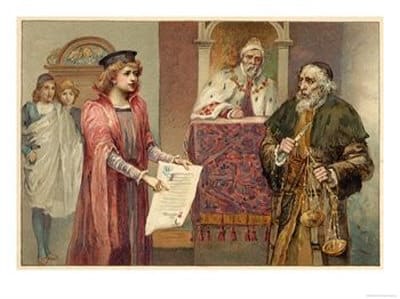
Merchant of Venice
Farewell False Love
Farewell false love, the oracle of lies,
A mortal foe and enemy to rest,
An envious boy, from whom all cares arise,
A bastard vile, a beast with rage possessed,
A way of error, a temple full of treason,
In all effects contrary unto reason.
A poisoned serpent covered all with flowers,
Mother of sighs, and murderer of repose,
A sea of sorrows whence are drawn such showers
As moisture lend to every grief that grows;
A school of guile, a net of deep deceit,
A gilded hook that holds a poisoned bait.
A fortress foiled, which reason did defend,
A siren song, a fever of the mind,
A maze wherein affection finds no end,
A raging cloud that runs before the wind,
A substance like the shadow of the sun,
A goal of grief for which the wisest run.
Sir Walter Raleigh

A mortal foe and enemy to rest,
An envious boy, from whom all cares arise,
A bastard vile, a beast with rage possessed,
A way of error, a temple full of treason,
In all effects contrary unto reason.
A poisoned serpent covered all with flowers,
Mother of sighs, and murderer of repose,
A sea of sorrows whence are drawn such showers
As moisture lend to every grief that grows;
A school of guile, a net of deep deceit,
A gilded hook that holds a poisoned bait.
A fortress foiled, which reason did defend,
A siren song, a fever of the mind,
A maze wherein affection finds no end,
A raging cloud that runs before the wind,
A substance like the shadow of the sun,
A goal of grief for which the wisest run.
A quenchless fire, a nurse of trembling fear,
A path that leads to peril and mishap,
A true retreat of sorrow and despair,
An idle boy that sleeps in pleasure's lap,
A deep mistrust of that which certain seems,
A hope of that which reason doubtful deems.
Sith then thy trains my younger years betrayed,
A path that leads to peril and mishap,
A true retreat of sorrow and despair,
An idle boy that sleeps in pleasure's lap,
A deep mistrust of that which certain seems,
A hope of that which reason doubtful deems.
Sith then thy trains my younger years betrayed,
And for my faith ingratitude I find;
And sith repentance hath my wrongs bewrayed,
Whose course was ever contrary to kind:
False love, desire, and beauty frail, adieu.
Dead is the root whence all these fancies grew.
Whose course was ever contrary to kind:
False love, desire, and beauty frail, adieu.
Dead is the root whence all these fancies grew.
Sir Walter Raleigh

Sir Walter Raleigh
Raleigh studied in Oxford-in its early times-well, he started studying in 1568. And it is in 1572 when he graduates. In that century-16th- it was very used to become a knight, well, he actually were knighted by the Queen. It happened in 1585.
Sir Walter was who popularized the Tobacco- specially among writers. He also expressed something about it: "It was my companion at the most miserable time. He actually wrote this quotation in Latin, he was very very smart.
Finally in 1603 he was imprisoned, because the Queen Elizabeth was angry for his marriage. He stayed in the Tower of London. Even when he had an spectacular room, fulfilled with all kind of comforts, he was all alone and some say he turned crazy. He died in 1618 and was buried in St. Margaret's church.

how handsome! isn't he?
sábado, 4 de febrero de 2012
Middle Ages
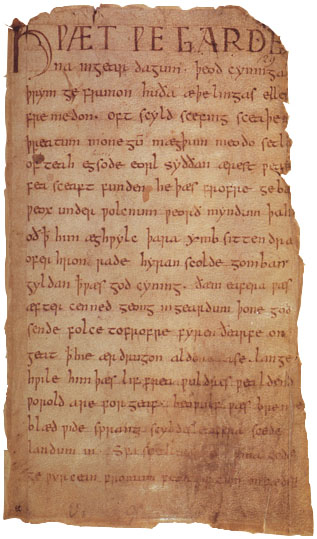
Beowulf is considered the first piece of literature, even when it was not. It was edited and discovered 19th century. It probably was written in Celtic, since King Arthur would spoke Celtic. Latin was the most spoken language, and was used for church. But then the rebellion started and people started to translate and write in other languages.

miércoles, 1 de febrero de 2012
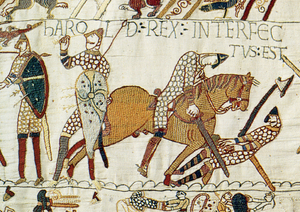
Bayeux Tapestry
It is a great piece of fabric, William the Conquerer ask it to be made to narrate his success in fight. It measures 70 meters long. Its main purpose is explain the history of the battle. At the begging the Tapestry shows people farming, soaring and shows a men killing a bird. So it first shows the way his population lived in William's times.
Then it displays the moment when Harold was crowned. As well, the Tapestry shows a part in which we can see the hand of God blessing Williams kingdom (assuming the hand is with him and not with Harold). And then, starts preparation for war, there are represented people cutting tress to build ships. Also we are able to see the arrows named armas in the Tapestry. Finally, women leaving their children to let them go to war.
At the end, there's the moment when William takes off his helmet and everybody can see him killing Harold by striking in an arrow.
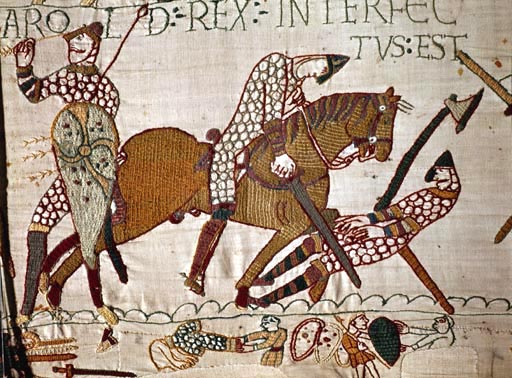
Battle of Hastings
I think that the explanation was very detailled and very well shared. I also think that the video was interesting because I didn't remember anything about the war and I've never seen that Tapestry.
Talking about war was full of blood and death. Well, it took place in Normandy, just a few hundreds of warriors or knights fought there, it is said that fighting began at 9:00 in the morning. It confronted William (now known as William the Conquerer) versus Harold king of Normandy. Then, there started the war and with it deaths and wounded. But it got to the point where, the king Harold was killed and it marked the ending of the war.
Now, it's part of English history and part of my knowledge.
Suscribirse a:
Entradas (Atom)